



The Ultimate South African Flooring Guide: Part 10
The Layout Rules: Pre-Installation, Direction, Staggering & Underfloor Heating
A flawless flooring installation goes beyond simply clicking or gluing planks together. Proper layout planning, determining the correct direction, and adhering to strict staggering rules are critical for both the structural integrity and aesthetic success of your Laminate, SPC (Stone Plastic Composite), or LVT (Luxury Vinyl Tile) floor.
Furthermore, if you are installing over underfloor heating, following the correct thermal protocols is the only way to protect your investment and maintain your manufacturer's warranty. Here is your comprehensive expert guide to the layout rules.
1. Pre-Installation Layout Planning
Before securing a single plank, meticulous planning is required to ensure a balanced and natural-looking floor.
🔀 Mix the Planks
Flooring is manufactured in batches, and variations are intentional. To avoid colour blocking, you must open and mix planks from at least three to four different boxes during the installation process.
📏 Calculate Your Rows
Measure the room width to determine your layout. If your last row is going to be less than 50mm wide, you must rip-cut the very first starting row to balance the floor and ensure structural integrity.
2. The Direction of Installation
The direction in which you lay your planks dramatically affects the visual flow of the room. Follow these guidelines to maximize your space:
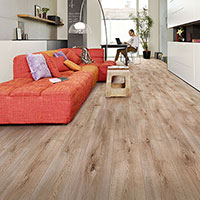
- Parallel to the Light: Lay planks parallel to the primary natural light source (e.g., a large window). This minimizes the visibility of seams and micro-bevels.
- Along the Length: For narrow spaces like passages, planks should run parallel to the longest wall. Running planks horizontally across a narrow passage creates a "ladder" effect that makes the space feel boxed in.
- Continuous Flow: In open-plan homes, maintain the same direction throughout connecting spaces for a cohesive, expansive feel.
3. The Golden Rules of Staggering
Why Stagger? Aligning joints in a straight line creates structural weak points. Staggering distributes weight evenly and breaks up repetitive lines for a natural look.
Laminate and SPC (Floating)
Stagger adjacent rows by a minimum of 20cm to 30cm. The professional industry standard is a 1/3 or 1/4 step pattern to ensure maximum structural integrity of the click-lock system.
LVT (Glue-Down Vinyl)
Because LVT is secured to the screed, installers typically use a precise 1/2 or 1/3 pattern for a balanced, traditional brick-like aesthetic.
4. The South African Underfloor Heating Guide
Modern floors are compatible with Underfloor Heating (UFH), but wood and plastic react to extreme heat. Technical standards must be followed.
Material Compatibility & Transfer
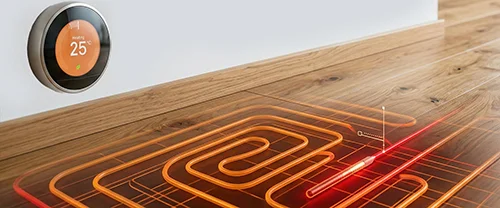
UFH Layers
- LVT (Glue-Down): Highly compatible. Thin material allows efficient heat transfer. Subfloor prep must be flawless.
- SPC (Rigid Core): Thermally stable limestone core withstands moderate UFH temperatures without excessive movement.
- Laminate: Compatible provided you use a thermal-conductive underlay that allows heat transfer rather than blocking it.
🔥 The 27°C Absolute Maximum
The actual floor surface temperature must never exceed 27°C. Exceeding this limit causes Laminate to shrink and SPC to warp or shatter click-joints.
Your UFH must use a physical floor limitation probe. Relying on air-temperature thermostats is a guaranteed way to overheat and destroy the floor.
- Gradual "Ramp-Up": Never shock the floor. Restart the system at a low setting and increase the temperature by no more than 5°C per day.
- Heat Trap Warning: Never use rubber-backed or thick dense rugs over heated floors. They trap heat, causing massive localized buckling.
5. The Silent Killer: Plasticizer Migration
You must be extremely cautious with Rubber or Latex Backed rugs on your new SPC or LVT floor.
Yellowing Chemical Reaction
Never place rubber-backed or latex-backed mats on vinyl. Chemicals in the rubber react with the vinyl wear layer through a process known as plasticizer migration, causing a permanent amber chemical stain that cannot be cleaned or buffed off.
This reaction is accelerated by heat, making it especially dangerous over underfloor heating systems.
💡 The Solution
Strictly use woven rugs or mats labelled as 'vinyl-safe' or 'non-staining'.