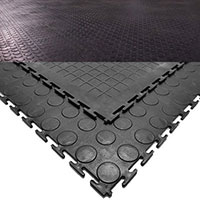
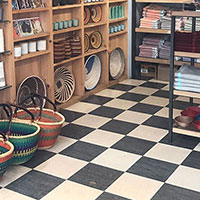

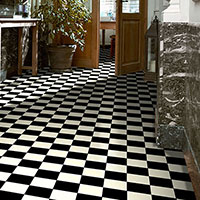
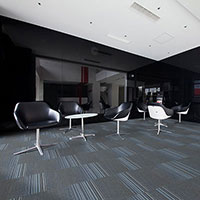
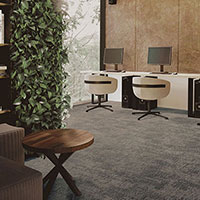
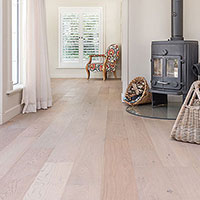


Overview of VCT Vinyl Tiles, Homogeneous Vinyl Tiles, Vinyl Sheeting, and Linoleum / Marmoleum
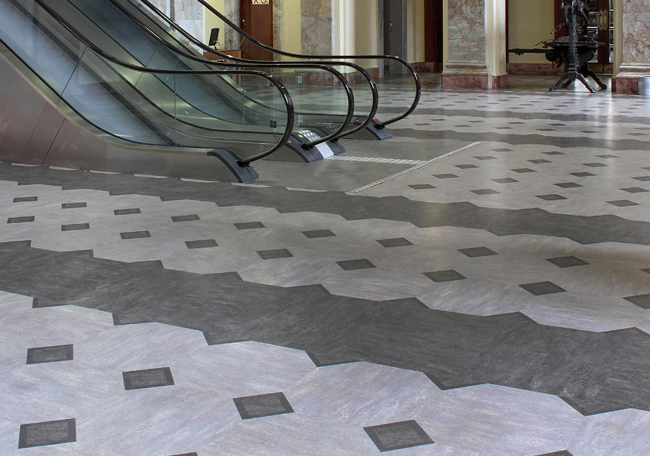
Homogeneous Vinyl Tiles, Vinyl Sheeting, and Linoleum/Marmoleum are popular resilient flooring options used in commercial and institutional settings like schools, hospitals, and retail spaces. Each type offers distinct characteristics in terms of durability, maintenance, moisture resistance, and environmental sustainability.
VCT — Vinyl Composite Tiles
Made from vinyl resins, fillers, and pigments, VCT is affordable and durable but requires regular maintenance like waxing. Standard sizes are 305 x 305 mm or 610 x 610 mm, with a thickness of 3.2 mm.
Homogeneous Vinyl Tiles
Composed of a single layer of vinyl for uniform wear and color, these tiles are durable and offer good moisture resistance. They usually measure 300 x 300 mm or 500 x 500 mm, with thicknesses between 2.0 and 3.0 mm.
Vinyl Sheeting
Comes in continuous sheets, typically 2,000 mm or 4,000 mm wide, with a thickness of 2.0 to 3.5 mm. It provides a seamless appearance and excellent moisture resistance, ideal for healthcare settings.
Linoleum / Marmoleum
Made from natural materials like linseed oil, cork dust, wood flour, and resins. It is an eco-friendly, durable, and naturally antimicrobial flooring option. Linoleum sheets are usually available in widths of 2,000 mm, with thicknesses from 2.0 to 4.0 mm.
Construction
VCT (Vinyl Composite Tiles)
Multiple Layers: Includes vinyl resins, fillers (e.g., limestone), and plasticizers, with a backing layer for stability.
Thickness: Around 3.2 mm.
Color Pigments and Stabilizers: For visual appeal and durability.
Backing Layer: Enhances dimensional stability.
Homogeneous Vinyl Tiles
Single-Layer Composition: Uniform vinyl material throughout for consistent appearance.
Thickness: Ranges from 2.0 to 3.0 mm.
Additives and Coatings: May include protective coatings for additional wear resistance.
Vinyl Sheeting
Continuous Sheet Construction: Made from a single, uniform layer of PVC.
Width: Typically 2,000 mm or 4,000 mm.
Thickness: Varies between 2.0 and 3.5 mm.
Optional Backing Layer: For added comfort and noise reduction.
Linoleum
Natural Composition: Made from renewable materials like linseed oil, wood flour, cork dust, and natural resins.
Single-Layer Sheet: Provides consistent color and texture throughout.
Width and Thickness: Commonly available in widths of 2,000 mm and thicknesses ranging from 2.0 to 4.0 mm.
Protective Coating: May include a factory-applied top layer to reduce maintenance.
Installation
Installation is very similar across all types — some differences noted below.
Subfloor Preparation
Ensure the subfloor is clean, dry and smooth — free of dust, dirt, moisture and imperfections. Patch any cracks or uneven areas before proceeding.
Acclimatization (Linoleum / Marmoleum only)
Allow linoleum to acclimate to room temperature for 24–48 hours before installation.
Layout Planning
Tiles (VCT and Homogeneous): Mark the centre of the room and start laying from there.
Sheet Flooring (Vinyl and Linoleum): Roll out and cut sheets to fit, leaving slight overlaps at seams.
Adhesive Application
Use the correct adhesive type — vinyl adhesive for VCT and homogeneous vinyl; linoleum-specific adhesive for linoleum. Spread adhesive with a trowel and allow it to become tacky before laying.
Installing the Flooring
Tiles: Lay from the centre, pressing firmly into adhesive. Roll with a heavy roller to ensure bond.
Sheets: Smooth into adhesive carefully, removing air bubbles as you go. Roll to secure.
Seaming (Sheet Flooring)
Heat-weld seams on vinyl sheeting and linoleum for a fully seamless, watertight finish.
Finishing
Roll the entire floor again for proper adhesion. Allow 24 hours for the adhesive to cure fully. Apply protective wax or sealer to VCT and linoleum after curing.
Quality of Resilient Flooring
Resilient flooring including VCT, Vinyl Sheeting, Linoleum and Homogeneous Vinyl offers durable, flexible and low-maintenance options for a variety of settings.
- VCT: Great for high-traffic areas due to durability and affordability — requires regular waxing. Best for commercial settings such as schools and retail stores.
- Vinyl Sheeting: Ideal for spaces requiring seamless, waterproof flooring such as bathrooms and healthcare. Look for thick wear layer for better durability.
- Linoleum: Best for eco-conscious buyers. Durable, naturally antimicrobial and sustainable — may need professional installation.
- Homogeneous Vinyl: Suitable for high-traffic areas needing uniform wear resistance and moisture protection such as hospitals and offices.
- Vinyl Sheeting & Homogeneous Vinyl: Excellent for wet areas
- VCT & Linoleum: Moderate water resistance — sealing advised
- Proper subfloor preparation and seam sealing can enhance water resistance regardless of product type
- VCT: Can be DIY-friendly with correct adhesive and subfloor preparation
- Linoleum & Vinyl Sheeting: Often require professional installation — seam welding adds to cost but is essential for watertight finish
- Homogeneous Vinyl: Professional installation recommended for commercial environments
- Linoleum: Most eco-friendly option — natural materials and biodegradable
- Low VOCs: Look for products with low VOC emissions for better indoor air quality
- Recycled Content: Some vinyl flooring options include recycled materials contributing to sustainability
- Make sure the chosen flooring matches your design needs — higher quality products usually have more vibrant and consistent colours
- Some resilient flooring is more prone to fading under UV light or scratching in high-traffic areas — check for products with protective layers
Caring for Your Resilient Flooring
Care requirements vary by product type. All resilient flooring benefits from regular sweeping, neutral-pH cleaners and prompt spill cleanup. Specific requirements by type are below.
- Sweep or dust mop daily to remove grit and debris
- Damp mop with neutral pH cleaner — avoid excess water
- Weekly wet mop or machine scrub with suitable cleaning solution
- Initial: Minimum 3 coats of floor polish after installation
- Routine: Reapply wax every few months in high-traffic areas
- Strip & recoat: Every 1–2 years — strip old wax fully before reapplying
- Never: Use abrasive cleaners or scouring pads — damages the wax layer
- Sweep or vacuum daily — grit causes surface scratching
- Damp mop with neutral pH cleaner
- Machine scrub weekly or monthly in high-traffic areas
- Factory-applied coating reduces need for regular polishing
- Sweep or vacuum to remove surface debris
- Damp mop with mild neutral cleaner — do not flood the surface
- Deep clean weekly with suitable vinyl floor cleaner
- Sweep or vacuum daily
- Damp mop with pH-neutral cleaner suitable for linoleum
- Never flood the floor — use a damp mop, not a wet mop
- Mild detergent designed for linoleum for weekly cleaning
- Initial: Apply linoleum sealer after installation
- Routine: Polish periodically to maintain protective layer
- Strip & reseal: Every 1–2 years — strip old sealer before reapplying
- Avoid: Ammonia-based cleaners and abrasive products
- Felt pads under furniture legs — linoleum is susceptible to indentation
- Entry mats to trap grit and moisture at doorways
- Rugs or runners in highest traffic zones
- Avoid dragging heavy furniture across the surface
VCT, homogeneous vinyl, sheeting and linoleum — specs, installation and maintenance guides.
Read FAQ →
Commercial grade VCT, homogeneous vinyl and sheeting available online with nationwide delivery.
Browse Products →
Adhesives, primers, self-levelling screed and finishing profiles for commercial vinyl installations.
View Accessories →