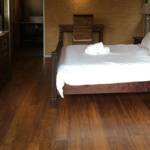
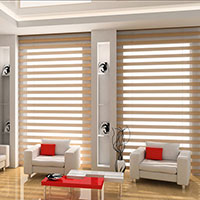


Bamboo Flooring Overview
Bamboo flooring is an eco-friendly, durable, and attractive alternative to traditional hardwood. Made from bamboo grass, it offers a sustainable flooring option with a unique appearance. Bamboo is known for its strength, resistance to wear, and suitability for various environments, including residential and commercial spaces.
Product Construction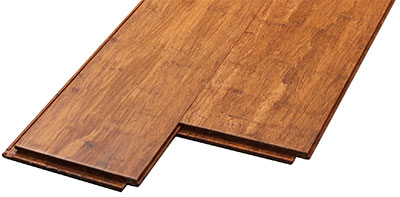
- Solid Bamboo Flooring: Made entirely from strips of bamboo that are compressed together. It offers a natural look and can be sanded and refinished multiple times.
- Engineered Bamboo Flooring: Consists of a bamboo veneer on top of a plywood or high-density fiberboard (HDF) core. This type provides enhanced stability and moisture resistance, making it suitable for areas with fluctuating humidity.
- Strand-Woven Bamboo: A type of bamboo flooring where the bamboo fibers are woven together and compressed under high pressure. This process makes it one of the hardest and most durable types of bamboo flooring.
Installation Options
- Floating Floor (Click-Lock): Bamboo planks interlock with one another and "float" over the subfloor. This is a DIY-friendly option that requires no nails or glue.
- Glue-Down: Adhesive is applied to the subfloor, and bamboo planks are glued down. This method provides a stable, permanent bond and works well over concrete subfloors.
- Nail-Down or Staple-Down: Bamboo planks are nailed or stapled to a wooden subfloor. This method is common for solid bamboo and provides a strong, secure installation.
Summary
Bamboo flooring offers a sustainable and durable option with several construction types like solid, engineered, and strand-woven. Installation options include floating (click-lock), glue-down, and nail-down, providing flexibility for various subfloors and installation needs.

Bamboo matures in 3–5 years vs decades for hardwood. Often grown without pesticides or irrigation.

Strand-woven bamboo scores up to 3,000 on the Janka scale — harder than most hardwoods.

Better moisture resistance than most hardwoods, especially in engineered bamboo constructions.

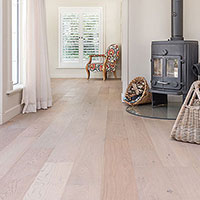
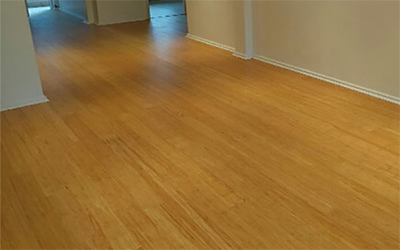
Unique grain pattern with a range of natural shades and finishes to suit modern interiors.

Click-lock floating option requires no nails or glue. Only basic tools needed.

Regular sweeping and occasional damp mopping with a pH-neutral cleaner keeps it looking new.

More affordable than traditional hardwood while offering comparable durability and aesthetics.

Does not trap dust or allergens — a good choice for people with allergies or asthma.
Type of Bamboo Flooring
Strand-Woven: Highest quality — fibres compressed under high pressure, harder and more durable than most hardwoods. Highly resistant to scratches, dents and moisture.
Horizontal: Natural look with visible nodes. Moderately durable. Good for a natural, grainy appearance.
Vertical: Fine-grain uniform look. Generally softer than strand-woven but decent durability.
Hardness Rating (Janka Scale)
Strand-Woven: Up to 3,000 on the Janka scale — harder than oak or maple. Look for ratings above 3,000 for superior wear resistance.
Horizontal & Vertical: Typically 1,200–1,400 — comparable to red oak. Suitable for moderate-traffic areas.
Material Source & Sustainability
Bamboo harvested at 5–7 years old is strongest. Look for FSC (Forest Stewardship Council) certification to confirm sustainable and eco-friendly sourcing.
Finish & Coating
High-quality bamboo is coated with multiple layers of aluminium oxide or UV-cured polyurethane for scratch, stain and fade protection. Look for Low VOC or GREENGUARD certified finishes for better indoor air quality.
Moisture Resistance
Strand-Woven: Naturally more moisture-resistant due to dense, compressed construction — suitable for kitchens and areas with varying humidity.
Engineered Bamboo: Bamboo veneer over a plywood core offers better moisture stability in humid environments.
Thickness
Thicker planks (14mm to 19mm) are more durable, can be sanded and refinished, and provide better stability and sound insulation. Look for at least 14mm for refinishing capability.
Warranty
High-quality bamboo flooring carries warranties of 25–50 years for residential use. Longer warranties reflect manufacturer confidence in durability and performance.
Installation Method
Floating (Click-Lock): Secure click-lock system for floating installations — fewer visible seams and DIY-friendly.
Glue-Down or Nail-Down: Better for stability in high-traffic areas. High-quality bamboo supports multiple installation methods.
Colour & Grain
Natural Bamboo: Lighter colour and maximum hardness — preferred for durability.
Carbonised Bamboo: Heat-treated for a darker aesthetic, but this process slightly reduces hardness. Choose based on your design preference vs durability priority.
Daily Cleaning
Sweep or Vacuum
Regularly sweep with a soft-bristle broom or vacuum using a hardwood floor attachment. This prevents small particles from scratching the surface.
Damp Mop
Use a lightly damp (not wet) microfibre mop with a pH-neutral, non-acidic, non-alkaline hardwood or bamboo-specific cleaner. Never soak the floor with water.
Spills & Stains
Wipe Spills Immediately
Clean up spills as soon as they occur using a dry or slightly damp cloth. Moisture left on bamboo can cause damage over time.
Tough Stains
Use a bamboo-safe cleaner with a soft cloth for sticky or stubborn spots. Avoid abrasive materials that could damage the finish.
Preventing Damage
Furniture Pads & Rugs
Place felt pads under furniture legs. Use rugs in high-traffic areas but ensure they are non-rubber-backed — rubber can trap moisture and damage the finish.
Sharp Objects
Be cautious of pet nails and high heels which can dent or scratch bamboo. Never drag heavy furniture — always lift.
Moisture & Humidity
No Wet Mops or Steam
Avoid wet mops, excessive water, or steam cleaners. Water can seep into seams causing warping or swelling.
Control Humidity
Maintain indoor humidity between 40% and 60%. Use a humidifier in dry climates and a dehumidifier in humid environments to prevent expansion or shrinkage.
Long-Term Maintenance
Reapply Finish
Over time the finish may wear in high-traffic areas. Use a bamboo-safe floor polish or refinishing product to restore shine and protect the surface.
Sand & Refinish
Thick wear-layer bamboo (especially strand-woven) can be lightly sanded and refinished to repair surface scratches and restore the original look.
What to Avoid
Harsh Cleaners & Sunlight
Avoid ammonia, bleach, or wax-based products — these damage the finish. Prolonged direct sunlight can cause fading; use blinds or curtains to protect your floors from UV exposure.
In-depth answers on hardness ratings, installation options, moisture resistance and maintenance.
Read FAQ →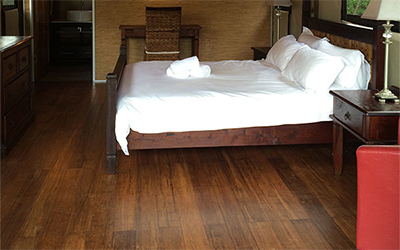
Solid, engineered and strand-woven bamboo with nationwide delivery across South Africa.
Browse Products →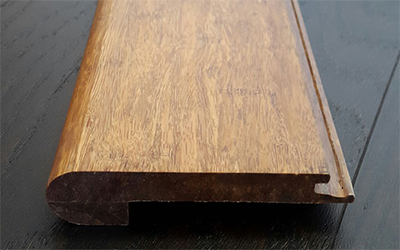
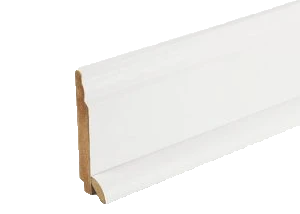
Skirting boards, door profiles, adhesives and underlays for a professional bamboo installation.
View Accessories →