

Effective Flooring Solutions for Damp Homes in Cape Town & The Western Cape
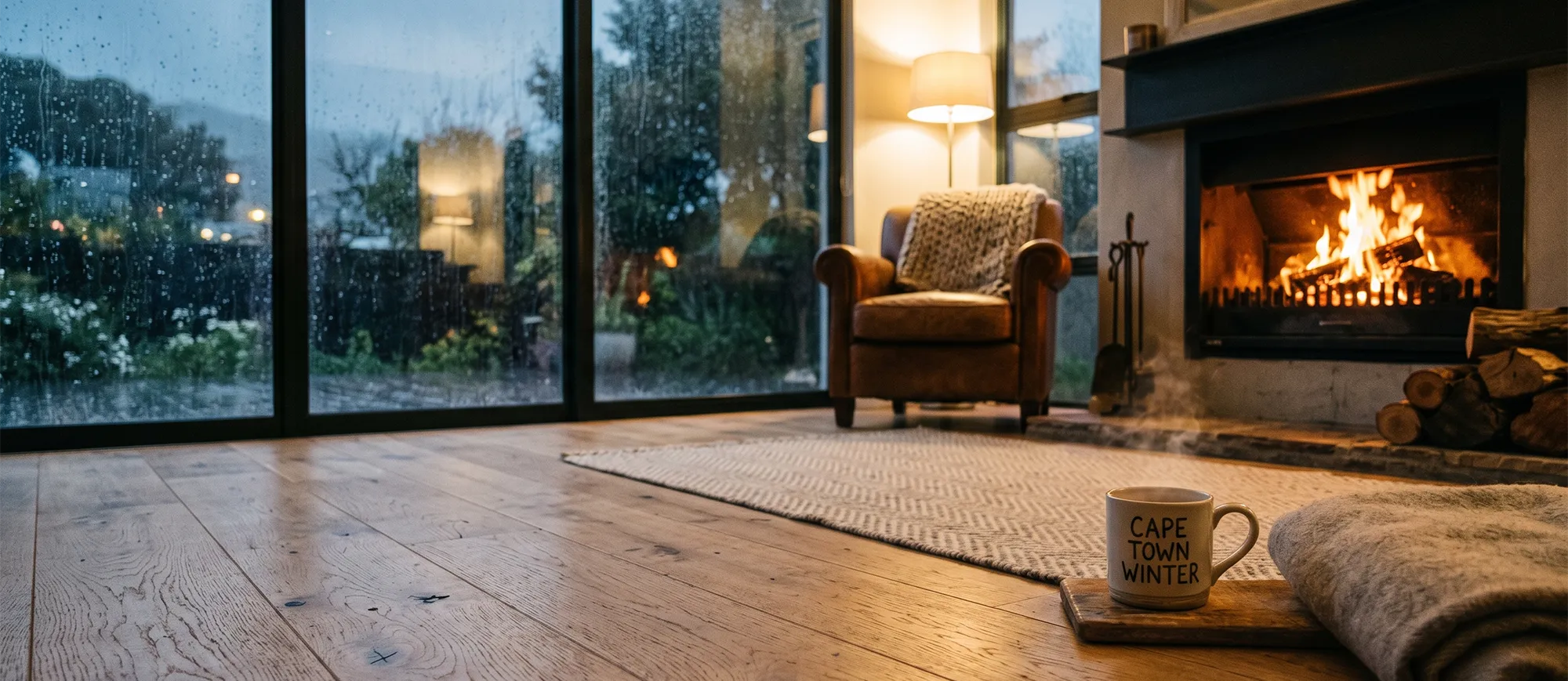
If you live in the Western Cape, you know the drill: beautiful, dry summers followed by months of driving rain. Whether you are in the Northern Suburbs, the Winelands, or along the Atlantic Seaboard, damp is the silent enemy of many homeowners.
The climate in areas like Cape Town, Bellville, and Durbanville brings unique challenges. It’s not just about the rain falling outside; it’s about rising damp in older properties and high humidity levels that can cause standard wood floors to buckle.
At FlooringStore.co.za, we often get asked by locals: “What can I install myself that won’t warp or rot when the wet season hits?”
Here is your comprehensive guide to prepping your subfloor and finding the right flooring solutions for the Cape climate.
Step 1: Prevention (Do This Before You Start)
Even the most waterproof flooring can fail if the substrate beneath it is wet. In the Western Cape, many homes are built on concrete slabs that absorb moisture from the ground like a sponge. Before you choose your floor, you need to seal the slab.
There are two main ways to create this essential defensive line:
1. The “Paint-On” Liquid Barrier
For direct-stick flooring (like glue-down vinyl) or tiles, you cannot lay plastic sheeting. Instead, you must apply a liquid moisture barrier directly onto the concrete.
- What it is: Usually an epoxy or bitumen-based liquid that is painted onto the raw concrete.
- How it works: It soaks into the pores of the cement and cures to form a hard, impermeable seal.
2. Installing a DPM (Damp Proof Membrane)
If you are installing a “floating” floor (like Click SPC or Laminate), the standard practice is to use a physical barrier.
- The Spec: You must use a virgin high-density plastic sheeting of 80 microns or more.
- Why Virgin Plastic? Recycled plastic can degrade over time. Virgin plastic offers higher durability and ensures a consistent barrier against rising moisture.
- How it works: The plastic is rolled out over the concrete, with the edges overlapping and taped down. This traps the moisture in the concrete and keeps your new floor dry.
Step 2: The Options (Top 4 Flooring Solutions)
Once your subfloor is prepped, which finish should you choose? Here are the top contenders, ranked by their effectiveness in damp environments.
1. SPC Rigid Core Vinyl (The Ultimate DIY Upgrade)
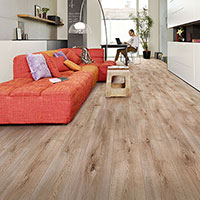
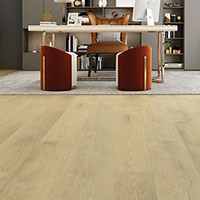
SPC (Stone Plastic Composite) is rapidly becoming the most popular flooring choice in South Africa. Think of it as the modern, waterproof upgrade to traditional laminate flooring.
- Why it’s an upgrade: It looks just like wood laminate, but instead of a fibre core, it has a rock-hard core made of limestone and stabilisers.
- The DIY Advantage: It features an easy “Click-Lock” system similar to laminate. You can easily install this yourself over a weekend without needing messy glues or heavy machinery.
- The Reality Check: While SPC is highly water-resistant and handles humidity perfectly, it is not invincible. If you have a major flood (e.g., a burst geyser) and water is left standing for more than 48 hours, even SPC can eventually buckle or fail. However, for everyday spills and wet winters, it is an excellent performer.
👉 Browse our DIY-Friendly SPC Rigid Core Planks
2. “Aqua” & Moisture Resistant Laminates (The Warmest Option)
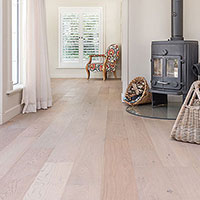
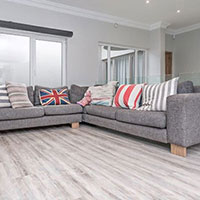
If you love the warm feel of real wood underfoot, modern technology has a solution. While old-school laminates used to swell immediately, the new generation is built differently.
- The Warmth Factor: This is the warmest option on this list. Laminate consists of wood fibre, which retains heat much better than stone or plastic tiles.
- The DIY Advantage: Laminate is the original DIY floor! It is lightweight, easy to cut, and snaps together effortlessly.
- The Moisture Pros: Look for laminates specifically labelled as “Moisture Resistant.” These planks feature a high-density core and treated joints. They are designed to withstand ambient dampness and surface spills much better than standard wood floors.
- Note: They are perfect for damp air and general living, but spills should still be wiped up reasonably quickly.
👉 View our Moisture Resistant Laminated Flooring
3. LVT Glue Down Vinyl (Dryback)
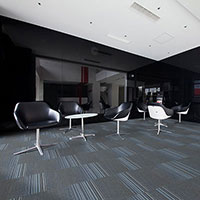
Also known as “Stick-down” Vinyl, this is a professional-grade solution often used in commercial spaces.
- The Moisture Pros: Because it is glued down with specialized adhesive, water cannot easily get under the planks. The material itself is PVC, which does not absorb water.
- The Installation (Expert DIY Only): This is the most challenging option. The subfloor must be glass-smooth, which requires a Self-Levelling Screed application first. This is not a simple trowel job; you will need specialized gear like a screed rake, spiked roller, and spike shoes to get it right. We recommend this only for expert DIYers or contractors. For most homeowners, the click-systems of SPC or Laminate are much easier to handle.
👉 Shop our LVT Luxury Vinyl Planks Range
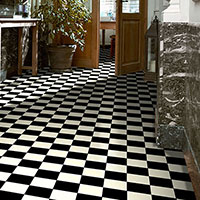
4. Porcelain & Ceramic Tiles
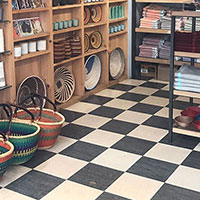
Tiles are often the “go-to” for wet areas, but they come with significant downsides that many homeowners overlook.
- The Cons:
- The “Cold” Factor: Tiles suck the heat out of a room, making them very uncomfortable during a Cape winter.
- Brittleness: If you drop a heavy pot or a mug, tiles will chip or crack.
- Repair Nightmares: Replacing a single chipped tile is a loud, dusty, and difficult job.
📊 Stuck between options?
Not sure which floor is best for your specific needs? We have a handy guide that compares moisture resistance, installation difficulty, and more.
Important: The “Waterproof” Myth
It is important to remember that no floor or installation is 100% waterproof.
If your home floods due to a storm or a burst pipe, water can eventually penetrate almost any surface or seep into the walls and subfloor. When we talk about “Water Resistant” or “Waterproof” flooring, we are referring to the product’s ability to withstand daily life, humidity, mopping, and reasonable spills—not natural disasters!
Summary: Which Floor is Right for You?
- For the easiest DIY installation + waterproofing: Go with SPC Rigid Core.
- For warmth + DIY installation: Go with Moisture Resistant Laminates.
- For commercial durability: Go with LVT Glue Down.
Find it fast:
On our website, you can easily use our Product Filters to select “Moisture Resistant” options and find exactly what you need.
Need advice?
Whether you are in Cape Town, the Northern Suburbs, or anywhere in South Africa, we are here to help. We don’t just sell boxes; we provide the best DIY flooring solutions tailored to your home’s unique needs.
If you have questions, please visit our Help Centre or get in touch with our team via our ticketing system: