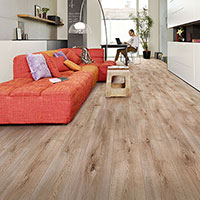
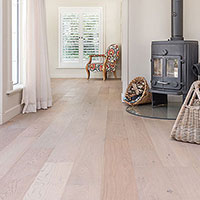
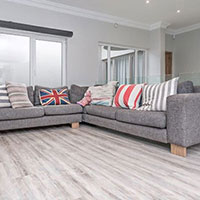
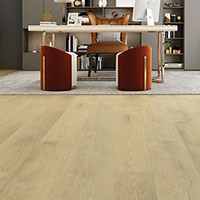
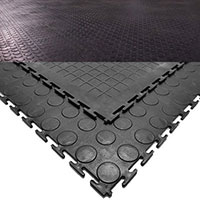
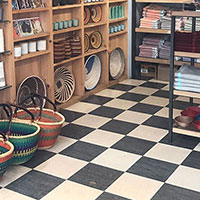


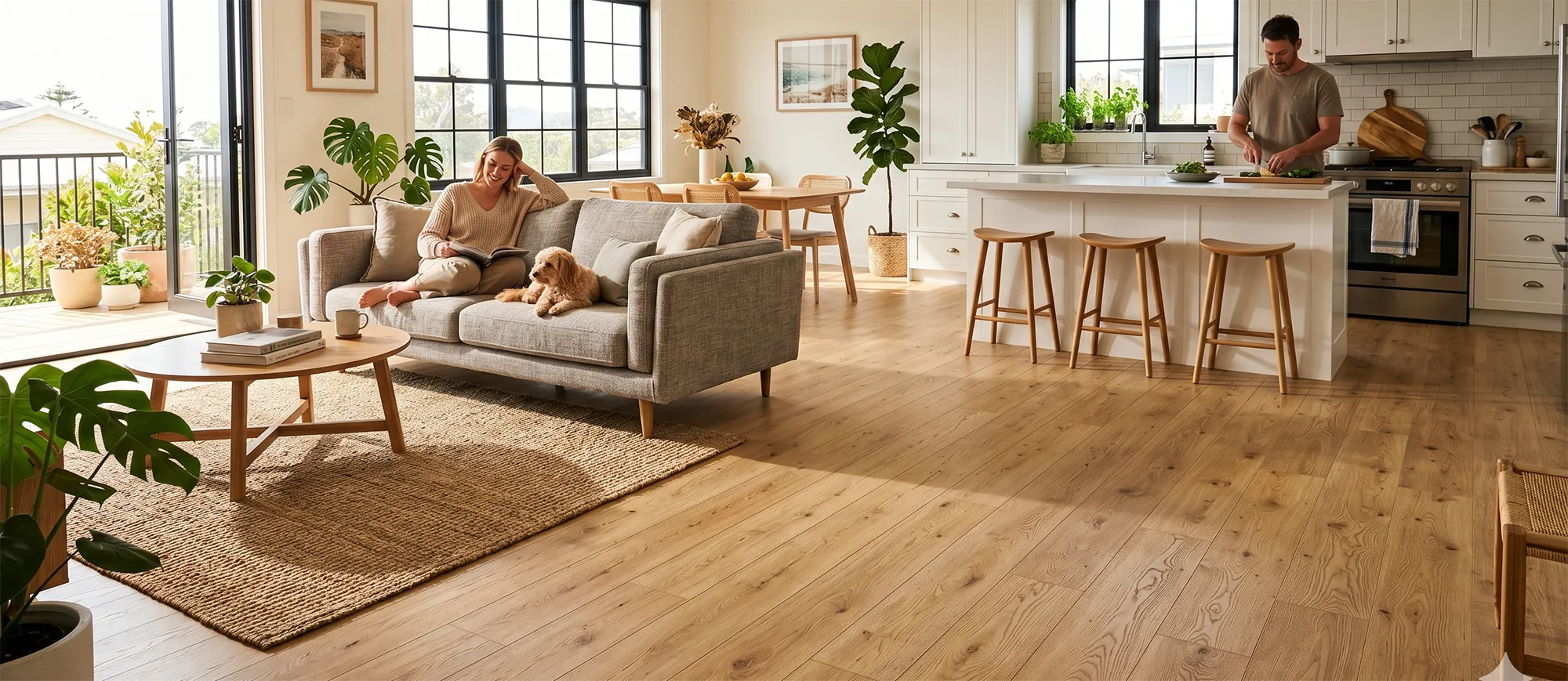
Two flooring types dominate South African homes in 2026: laminate and vinyl. They look similar on the shelf, cost roughly the same, and both outperform ceramic tile and hardwood on price. But they perform very differently once they're on your floor — and choosing the wrong one for the wrong room is an expensive mistake.
For dry rooms — bedrooms, lounge, dining room — laminate gives you the best scratch resistance and warmth underfoot at the lowest entry price. Premium laminate is moisture-treated and handles spills well; budget laminate is not — always check the product spec. For wet or damp areas — bathrooms, kitchens, utility rooms — choose SPC or LVT vinyl. Both SPC and LVT are 100% waterproof and won't swell or buckle if water gets in. Avoid all three in unshaded sunrooms — South Africa's sun intensity will fade any floor over time.
What is Laminate Flooring?
Laminate flooring is a multi-layer product built around a High-Density Fiberboard (HDF) core. The core gives it rigidity and warmth underfoot. On top sits a high-definition photographic layer — this creates the wood, stone, or tile appearance — sealed by a tough aluminium-oxide wear layer that resists scratches and everyday abuse.
Laminate is always installed as a floating floor. It clicks together and rests on an underlay — never glued or nailed to the subfloor. This makes it one of the most DIY-friendly flooring options available, and it can be lifted and re-laid if needed.
Water resistance — not all laminate is equal: Premium laminate is chemically treated at the HDF core and has sealed locking joints that handle spills well if wiped up promptly. Budget laminate has no such treatment and is far more vulnerable to moisture. Either way, laminate is not waterproof — prolonged contact with water, or water entering the joints, causes the HDF core to swell and permanently damages the plank. Do not install any laminate in bathrooms, wet rooms, or areas with regular moisture exposure.
What South African Buyers Are Choosing in 2026
Flooring trends in South Africa in 2026 are heavily influenced by what is driving the broader European and Australian markets — but with a distinctly local flavour around durability in our climate and the practical realities of older housing stock.
EIR texture (Embossed in Register) is the defining quality marker on premium laminate right now. EIR means the embossed surface grain is aligned precisely with the printed wood grain below it — so the plank looks and feels like real timber when you run your hand across it. Budget laminate uses a generic emboss pattern that doesn't match the print. If you're comparing two products at different price points, EIR is often the difference.
Longer, wider planks are dominating new installations. The old standard of 1200mm × 190mm is being replaced by planks of 1800mm–2400mm in length and 220mm+ in width, in both laminate and SPC vinyl. Fewer joints, more realistic scale, and a more open feel in smaller South African rooms.
V-groove profiles are near-universal on premium products. The micro-bevel around each plank edge creates definition between planks and further reinforces the real-wood look. Smooth-edge (no bevel) products are becoming less common at the mid-to-upper range.
Colour palette: Light oak tones — warm honey, bleached natural, and greige (grey-beige) — are dominating both laminate and SPC sales in 2026. The grey-washed look that peaked around 2018–2020 is fading. Buyers are moving toward warmer neutrals that work with both white and timber-toned furniture. Darker tones (walnut, smoked oak) remain popular in studies and home offices.
What is Vinyl Flooring? (LVT and SPC Explained)
Vinyl flooring in 2026 comes in two main formats relevant to South African homes: LVT (Luxury Vinyl Tile/Plank) and SPC (Stone Plastic Composite). Both are 100% synthetic, built from PVC layers, and 100% waterproof throughout.
| Format | Core | Installation | Water | Best For |
|---|---|---|---|---|
| LVT (Luxury Vinyl Tile/Plank) | Flexible PVC core | Glue-down — requires screeded subfloor | 100% waterproof | Seamless wet areas, under cabinetry |
| SPC Rigid Core Vinyl | Stone Plastic Composite — rigid | Click-lock floating floor | 100% waterproof | Any room, DIY-friendly, damp areas |
LVT (glue-down): The flexible nature of LVT means it conforms very closely to the subfloor — which is why a perfectly smooth, flat surface is non-negotiable before installation. LVT is glued down without perimeter expansion gaps, which means no skirting gaps, no transition strips between rooms, and a seamless flow from room to room across your whole floor. This makes it the best option under fixed cabinetry and in open-plan layouts. Subfloor preparation typically involves a smoothing compound (sometimes called self-levelling, though that name is misleading — it does not make an uneven floor level, it smooths an already-near-flat surface). It is applied at approximately 4–5mm and must be allowed to cure before laying. This is manageable for a confident DIYer comfortable with mixing and applying smoothing compound — otherwise call in a professional.
SPC (click system): SPC has a rigid stone-composite core, but do not assume it tolerates rough subfloors — the click-locking joints are more sensitive to subfloor movement than laminate and can stress and fail if laid over an uneven surface. High spots and dips must be corrected before installation: grind down protrusions, fill hollows with smoothing compound. The tolerance is typically 3mm across a 3-metre radius, though this can vary by manufacturer — always check. Within those tolerances, SPC is more forgiving than glue-down LVT and installs as a floating click floor similar to laminate, with small expansion gaps around all perimeters. It remains the most practical waterproof option for South African DIYers — but subfloor prep is still essential.
Laminate vs LVT vs SPC — Head-to-Head Comparison
| Feature | Laminate | LVT (Glue-Down) | SPC (Click) |
|---|---|---|---|
| Core material | HDF (wood-based) | Flexible PVC | Stone Plastic Composite |
| Water resistance | Premium: moisture-treated — spill tolerant. Budget: vulnerable to moisture. Not waterproof. | 100% waterproof | 100% waterproof |
| Starting price | See product pageslive prices load below | See product pageslive prices load below | See product pageslive prices load below |
| Installation method | Click-lock floating | Glue-down | Click-lock floating |
| DIY-friendly? | Yes — very | Yes if confident with smoothing compound — otherwise use a pro | Yes — subfloor must be flat and even |
| Subfloor requirement | Flat, dry, solid — 3mm/3m tolerance typical | Smooth and flat — smoothing compound almost always needed | Flat and even — click joints sensitive to movement, 3mm/3m typical (check manufacturer) |
| Scratch resistance | High — wear layer dependent (aluminium oxide) | High — wear layer dependent | High — wear layer dependent |
| Warmth underfoot | Warmest of the three | Cooler — PVC core | Moderate — better than LVT |
| Sound / hollow feeling | Can be hollow — minimum 2mm foam underlay with DPM required | Quiet — glued solid | Most SPC includes pre-attached underlay — DPM still needed on concrete |
| Expansion gaps needed? | Yes — all perimeters and doorways | No — seamless, flows between rooms without transition strips | Yes — but smaller than laminate |
| Sunlight fading | All flooring fades in intense SA sunlight — avoid direct unshaded sun exposure | All flooring fades in intense SA sunlight — avoid direct unshaded sun exposure | All flooring fades in intense SA sunlight — avoid direct unshaded sun exposure |
| Recommended rooms | Bedrooms, lounge, dining room, study — dry areas only | Any room including bathrooms — avoid unshaded sunrooms | Any room including bathrooms — avoid unshaded sunrooms |
Pros and Cons at a Glance
- High scratch resistance — wear layer dependent (aluminium oxide on quality products)
- Warmest underfoot of all hard floors
- Premium products: EIR embossed texture, realistic wood visuals
- Easy DIY click-lock installation
- Generally lowest entry price
- Premium grades: moisture-treated core and sealed joints
- Not waterproof — budget laminate especially vulnerable to moisture
- HDF core swells with standing water or joint penetration
- Can sound hollow — minimum 2mm underlay with DPM required
- Expansion gaps required — visible at all edges
- Cannot be refinished — plank replacement only
- Not suitable for bathrooms, wet rooms or unshaded sunrooms
- Budget laminate: no EIR, no moisture treatment
- 100% waterproof — safe in bathrooms, kitchens, laundry
- Highly resistant to scuffs, stains and spills
- LVT glue-down: no expansion gaps — seamless flow between rooms
- SPC click: DIY-friendly, stable, most SPC includes pre-attached underlay
- Quiet underfoot — LVT especially (glued solid)
- Suitable for underfloor heating (check per product)
- LVT: subfloor must be smooth — smoothing compound almost always needed
- SPC: click joints sensitive — subfloor must be flat and even
- Cooler underfoot than laminate
- All flooring fades in SA sunlight — avoid unshaded sunrooms
- Glue-down LVT is difficult to remove later
- Budget LVT can feel thin underfoot
How Quality is Graded — AC Ratings and Wear Layers
Laminate: The AC / EN 13329 Grading System
Laminate quality is rated using a three-part system: the Site Label (how we describe it), the AC Rating (Abrasion Class, how hard the surface is), and the EN 13329 Grade (European standard application class). All three refer to the same product. AC1 and AC2 products are not stocked in the South African market — the practical range starts at AC3.
| Site Label | AC Rating | EN 13329 Grade | Recommended Application |
|---|---|---|---|
| Heavy Residential | AC3 | Grade 23 | Heavy residential — all areas of the home |
| Light Commercial | AC3 | Grade 31 | Small offices, low foot-traffic commercial |
| Medium Commercial | AC4 | Grade 32 | Offices, medium commercial traffic |
| Heavy Commercial | AC5 | Grade 33 | Retail, maximum durability commercial |
What to choose for your home: AC3 Heavy Residential covers all areas of a South African home comfortably. AC4 Medium Commercial is the right choice if you want extra headroom — busy family homes, rentals, or high-traffic hallways and living areas. Each product page on FlooringStore.co.za shows the Usage Classification — always verify this before buying.
LVT and SPC: The Wear Layer
Vinyl flooring does not use the AC system. Durability is determined by the wear layer thickness — the clear protective coating on top of the plank. Thicker wear layer = longer life. Wear layer is measured in millimetres (mm) in South Africa.
| Wear Layer | Application | Expected Lifespan |
|---|---|---|
| 0.15mm – 0.2mm | Light residential — bedrooms, low-traffic areas | 10–15 years |
| 0.3mm | General residential to light commercial | 15–20 years |
| 0.5mm+ | Any residential up to heavy commercial — product dependent | 20–25 years |
For high-traffic areas — hallways, open-plan living areas, kitchens — always choose a wear layer of 0.3mm or thicker. The wear layer thickness is listed in the product specifications on every vinyl product page.
Which Flooring for Which Room?
| Room | Recommendation | Notes |
|---|---|---|
| 🛁 Bathroom / Wet Room | LVT or SPC Vinyl | 100% waterproof essential |
| 🍳 Kitchen | LVT or SPC Vinyl | Spills, splashes — waterproof only |
| 🧺 Laundry / Utility | LVT or SPC Vinyl | 100% waterproof essential |
| 🚶 Entrance / Hallway | SPC Vinyl (0.3mm+ wear) | High traffic — waterproof and durable |
| 🛋 Lounge / Living Room | Either works well | Laminate warmer; SPC/LVT if pets or spills likely |
| 🍽 Dining Room | Either works well | Laminate scratch-resistant; vinyl easier to wipe |
| 🛏 Bedroom | Laminate (AC3) | Warmest underfoot — dry area suits laminate well |
| 📚 Study / Home Office | Laminate (AC3) | Dry area — laminate scratch resistance ideal |
| ☀️ Sunroom / Conservatory | ⚠️ Avoid all three | SA sun intensity will fade any floating floor — use tile |
Which Should You Choose?
- Your room is dry — bedroom, lounge, study, dining room
- Scratch resistance is a priority — pets, children, heavy furniture
- You want the warmest feel underfoot
- You're installing it yourself (click-lock DIY)
- Budget is tight — laminate typically starts lower
- You want the most realistic embossed wood texture
- The room gets wet — bathroom, kitchen, laundry
- You have young children or pets — spills guaranteed
- You want one floor type throughout the whole home
- SPC click: DIY-friendly and fully waterproof
- LVT glue-down: seamless finish, call in a professional
- You're fitting over underfloor heating — check product specs
Subfloor Preparation — What You Need to Know
Both laminate and vinyl require a flat, dry, structurally sound subfloor. The tolerance and method required differs between the three:
- Laminate: Subfloor must be flat — typically 3mm across a 3-metre radius, though this can vary by manufacturer. Minor high points can be ground down; hollows filled. The rigid HDF core bridges small imperfections better than glue-down LVT, especially in 12mm thickness.
- SPC Vinyl (click): The click-locking joints are more sensitive to subfloor movement than laminate — an uneven floor will stress the joints over time. The same 3mm/3m tolerance applies (check your product's spec sheet). Correct high spots and fill dips before laying. SPC cannot be assumed to tolerate rough subfloors just because it's rigid.
- LVT (glue-down): Requires the flattest, smoothest surface of all three. Any bump or hollow telegraphs through the flexible vinyl and becomes visible. Subfloor preparation almost always requires a smoothing compound — note that "self-levelling" is a common but misleading term. The compound does not level an uneven floor; it smooths a surface that is already near-flat. It is typically applied at 4–5mm and must fully cure before laying. Grinding down high spots first is essential.
A note on terminology: in South Africa the product is widely called self-levelling compound, but smoothing compound is more accurate and sets the right expectation — it smooths, it does not correct structural unevenness. Your installer or hardware supplier will know what you mean by either name.
FlooringStore.co.za does not offer installation, but we can connect you with vetted flooring professionals throughout South Africa.
Frequently Asked Questions
Explore Our Flooring Ranges
Now that you know the difference, browse the ranges and compare live prices directly on the product pages:
- Laminate Flooring Range — 8mm and 12mm, AC3 to AC5
- SPC Rigid Core Vinyl — 100% waterproof click planks
- LVT Glue-Down Vinyl — seamless professional finish
- Learning Centre — guides, specs and buying advice
- Get an Installation Quote — we connect you with vetted installers